

Space is always intrigued as much as it contains unpredictable dangers in its darkness. Therefore, scientists use simulations or computer simulations that are designed in the closest way to the target environment in many of their experiments.
Pioneering research has also been sent to Mars on life on Mars, and other spacecraft still on the road have been acted on in this way. However, when the focus of their research in question is a human form that will go to Mars this time, the studies have to be moved to a much different dimension. Machines are generally mechanical, they detect with their sensors; obedient systems without emotions and whims.
Whereas, the human life form does not bring only water and food with it. He takes his emotions, fears, phobias, whims and other needs with him everywhere he goes. In this case, simulations should be tried in person at Mars Research Stations, which are simulated more realistically than computer screens and established on Earth.
For this purpose, research stations have been established in many countries by scientists and volunteers, some even funded by states. Although the number of mars-related groups is quite large, there are very few research stations that have actually been implemented.
We have previously stated that we have cooperation with different groups working on Martian research on Earth. In this article we take it to a fairly remote station; Brazil!

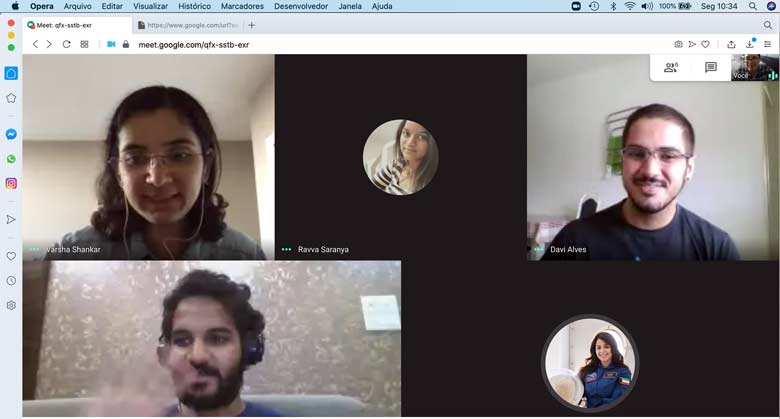
In this context, our first introduction; we have previously held a teleconference with our community and will be with the "Habitat Marte" community located in Brazil.
We share with you our written interview with Ph.D. Julio Rezende.

Hello and best regards. Thank you, Prof. Dr. Julio Rezende, for your interest in joint work and for accepting our interview proposal. We would like to start our interview by sending greetings and good wishes to the valued members of your community, especially you.
First of all, would you introduce yourself to our readers? Who is Julio Rezende? Where and what tasks are you currently carrying out? (By the way, as a team; Congratulations also on your new federal advisory role at the CFA)

Thanks for all the effort developed to popularize Science, Technology and Math in Republic of Turkey.
Introducing myself, I’m a researcher interested to help the awareness and knowledge about space and sustainability. One of the very good tools for this is the space analog stations. I am really interested to support the creation of new space analog station in many parts of the World, areas that presents educational, research, environmental attractiveness.
I’m bachelor’s in management and Psychology, master and PhD on Sustainability (Universidade Federal do Rio Grande do Norte - UFRN) and post-doc in University of Central Florida- UCF (Orlando-Florida).
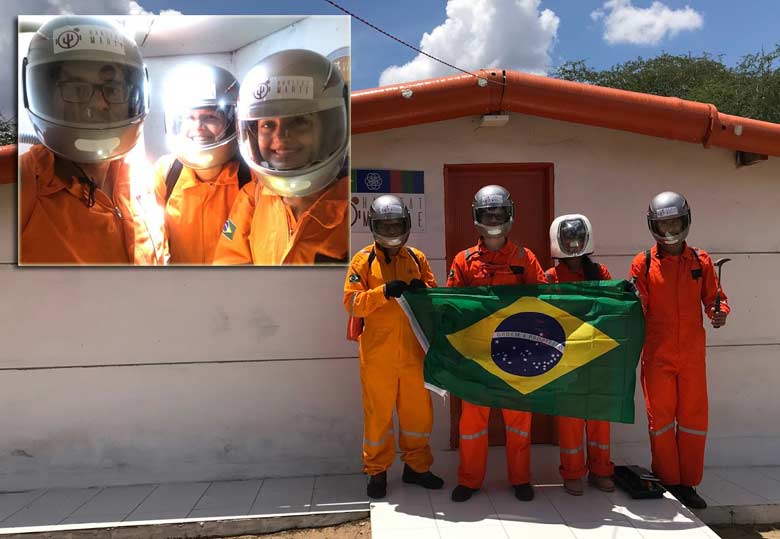
I’m professor of UFRN, Innovation director of FAPERN, coordinator of space analog station Habitat Marte and CFA councilor.
We see that your professional knowledge and interests are not actually too far away from Mars research. What impresses you the most about Mars and initiates these studies?

The challenge it to think about sustainability. How will be the operations there, on Mars. and how We can discuss about it and how We can identify possible outputs and spin-offs to be applied in our daily life on Earth.
You have written some books, including your book preparations, which include learning and implementing management tools such as space, sustainable technologies, management of analog Mars mission processes, projects, innovation and sustainability. Can you tell us about his work and its content? Do you have a new book study?

I launched a book about Perseverance. Not only the NASA rover, but also the behavior and attitude associated to the experience of Habitat Marte, our challenges and achievements about persevere and be positive about the future and always have hope. Related to other books, actually I’m planning about launch new books related to Mars, space and sustainability.
You also have the title of being the first Brazilian to publish a study on Mars at the 19th Mars Society Convention in USA/Washington DC in 2016. What did your research topic take, how did this process unfold, and what kind of feedback did you get afterwards?

In the research published during 19th Mars Society Convention in USA, 2016, I presented the first considerations about how would to be the operation of Brazilian space analog station Habitat Marte, also identifying learnings from the operation of Mars Desert Research Station in Utah, United States. Was very interesting see the interest of the audience about the proposal about the first space analog station on Southern Hemisphere. An important result of this event was the network, to know very lovely persons.
In 2017, you served as the first Brazilian researcher and team leader at a research station on Mars Desert Research Station (MDRS) Mars in the American/Utah desert. How has this process evolved and what has this experience brought you? In what field have you done research as long as you are in MDRS?

The mission 182 on Mars Desert Research Station (MDRS) was very important to bring learnings about the operation of a space analog station. The research developed in MDRS was about sustainability practices that would be operating aboard analog and real future space analog stations. The methodology applied during the MDRS missions also was applied in DMARS space analog station in Israel and is been currently applied in all missions organized by Habitat Marte.
How was it decided to establish Habitat Marte? Who led the way and what happened during the installation process?
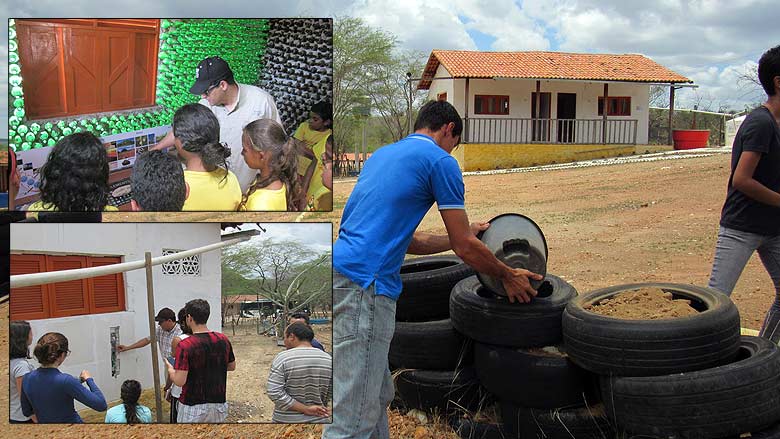
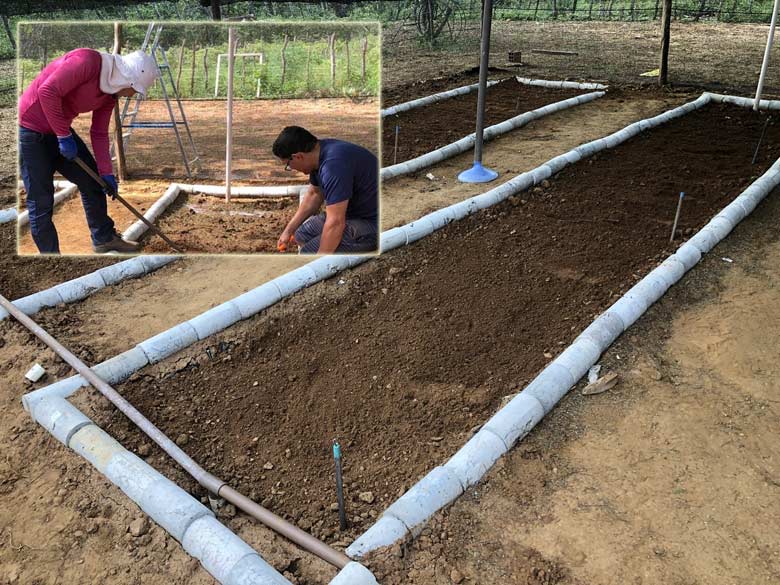
The process was leaded by me since I saw the amazing experience of MDRS on Utah desert and this inspired us to create Habitat Marte. This was during my post doc when I was examining amazing sustainability experiences. I saw that the closed systems, such as the space analog stations, are very important locations to think about self-sustainability. We just was developing research on sustainable construction and social technologies in the location where after was installed Habitat Marte. Some photos of our constructions can be seen in NUPECUFRN.
A little far away from Natal. To get to Habitat Marte, you and your researchers have to use about 75 miles. While most of the road is paved, does the distance cause you trouble supplying basic food or accessing emergency health care?

We need to plan very well the travels to Habitat Marte to supply all necessary and required elements. But there is a small city close (7 Km.) where we can find items to supply some emergency of food, tools and health.
What are the other objectives and expectations targeted when creating Habitat Marte?

Habitat Marte presents 10 objectives;
- Be a space to develop technologies to be operating in Mars and supporting the habitability in red planet,
- Develop technologies related with water supply, food, shelter and clothing applied to Mars and arid Earth regions,
- As a Research Center we are engaged to identify worldwide technologies that would be receiving collaboration of Universidade Federal do Rio Grande do Norte – UFRN researchers,
- Identify possible outcomes/ technologies developed in Mars Research Stations that would be transferred to communities impacted by climate change (droughts and severe weather),
- Establish partnerships with worldwide space research groups,
- Be an educative place to educators and students to find new knowledge related to Science, Technology, Engineering and Mathematics (STEM) and personal sustainability,
- Be a place to encourage new scientists in terms of new communication skills, creative thinking skills, and both traditional and technology skills,
- Collaborate with community and families of Caiçara do Rio do Vento focusing on changes in student attitudes toward science and an awareness of college pathways and opportunities for scientific careers,
- Be an organization to support new Mars Research Stations and international Space Agencies,
- Be an active player debating the Agenda for Sustainable Development and the new practices in arid and semiarid regions related Sustainable Development Goals (SDGs) bringing collaboration to environment, society and economy of territories.
How was the area where Habitat Marte was founded decided? Is there a certain geological feature of the area it is located in? Habitat Marte is geographically located far from the metropolises. What factors have come to the forefront in your selection criteria for its establishment in northeastern Brazil and in a semi-a dry region? Was this choice of location a suggestion or was it the result of a research process?
Video-1. Habitat Marte Station.
We can mention some reasons;
- Previous research done in the area,
- It is a semiarid ecosystem with cactus in the landscape,
- Scarcity of water and the challenges related with it,
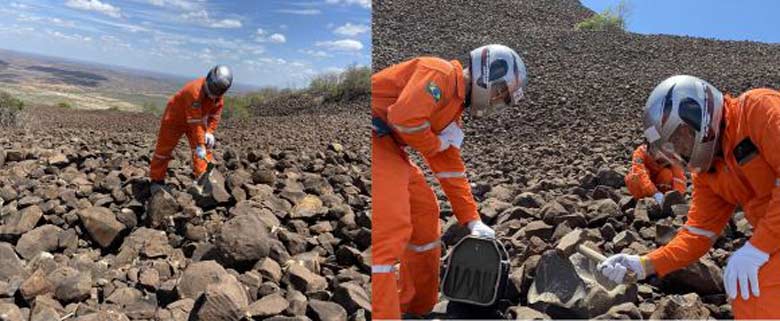
- Proximity to Cabugi extinct Volcano, an important hotspot where can be found ana soil analog to Mars regolith,
- Good logistic conditions from Rio Grande do Norte State capital, Natal.
Do you plan to open a second habitat area in the future, as the Rainforest region has other extreme conditions compared to a dry regions? Providing 20 percent of the earth's oxygen, the So-called "Earth's lungs" the Amazon Rainforest prevents the release of more than a billion tons of atmospheric carbon a year. In addition, as you know, ecological life is also in danger of many risk factors, such as field dust, volcanic ash and pollution of water resources carried by upper atmosphere winds. Several fires in the region of the city of "Novo Progresso" have resulted in severe forest losses in the rainforest. So much so that Brazil's National Institute for Space Studies (INPE) also referred to this issue in its statements, noting the significant deforestation rate of forests. INPE is already working on a meteorological data network in all documents. We wondered if Habitat Marte's remote station could be a part of this work.
It is an interesting idea. We just already cooperate with INPE office in Natal, where We live. All new steps are related to be available funding for it.
Has Habitat Marte been established in this region, the recognition, development or socio-economic recycling of the region? Have you received any positive or negative reactions from residents?
Video-2. Robert Zubrin (The Mars Society) presenting a testimonial about Habitat Marte.
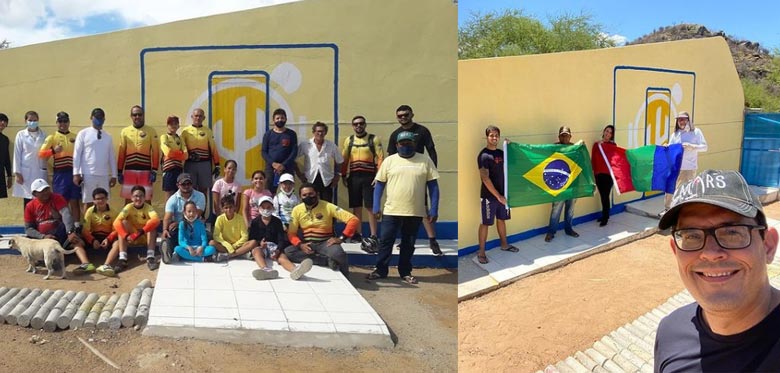
We present a very good relationship with Caiçara do Rio do Vento municipality and the public school in the city. Habitat Marte only presents positive impacts on local community. Our goal is related to search economic sustainability and identify possible funding to our operations. Now, Habitat Marte it is a touristic place in the region receiving frequently curious people to learn more about our activities.
We are contributing to a better education for all, using space as a trigger to invite students to be committed with Science, Technology, Engineering and Mathematics – STEM. We want to do this worldwide.
Were there any serious glitches in the project that went uncensed or later during the installation of the facility, and if so, how were these problems overcome?

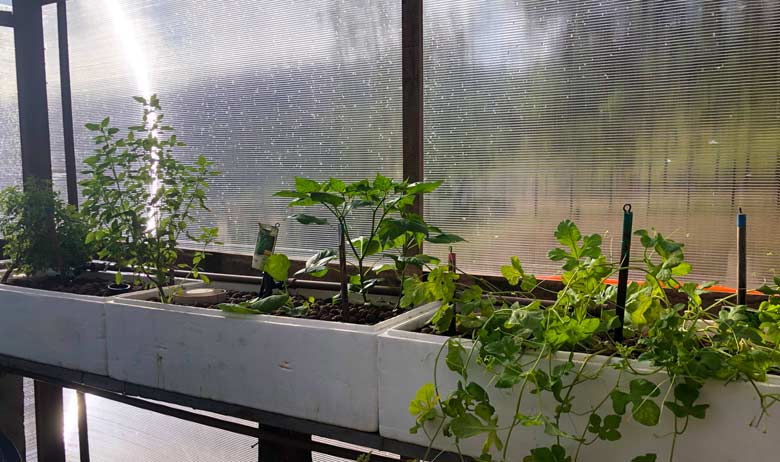
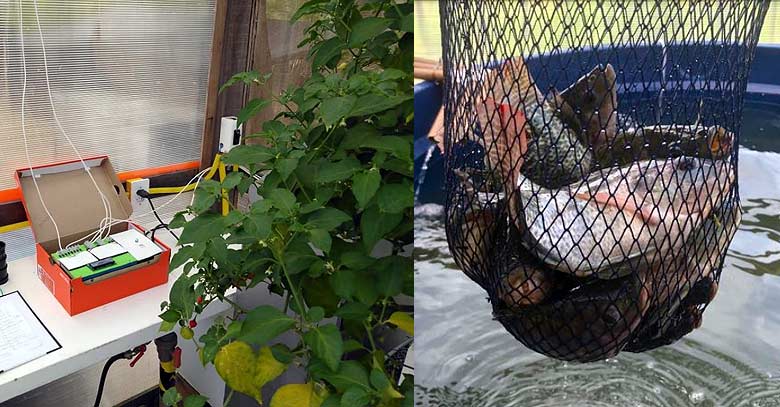
The greatest worry since the beginning it is related how supply water to our agricultural experiments and keep the greenhouse continuously operating. This is a great challenge. We need more water and be more smart about how to save water and promote the reuse of the sewage.
Habitat Marte is a project developed by the Department of Industrial Engineering at UFRN - Rio Grande do Norte Universidade Federal. Why sustainability, especially in semi-a dry areas? Did your master's and doctorate in this field direct you to work in this field? Is the study aimed at living areas on Mars or meeting the need for food and clean energy on Earth, economy, etc. Does that include studies?
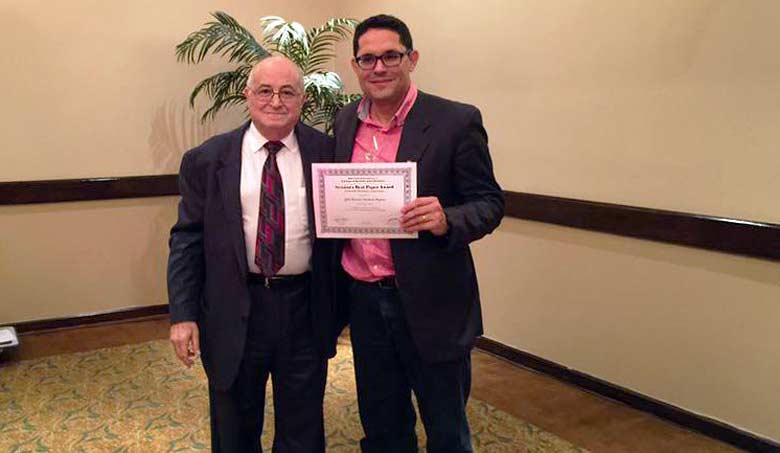
It is very strategic the studies about the effects of climate change and global warming to areas affected by water scarcity and stress. It is necessary develop ways to live observing new solutions that helps us to live sustainably considering water, energy and food production. This are some topics studied by me in Industrial Engineering Master course on UFRN.
My master was on innovation and doctorate about sustainability. My contact with space analog stations and innovation and sustainability applied was during my post doc and completing five years now.
Can you provide information about your connections and cooperation with national and international institutions and organizations? (Other Mars research stations, universities, CRA-RN and FAPERN, etc.)

We present the greatest cooperation with UFRN, but also others national and international institutions. Recently we are very happy about to be recognized by professor Robert Zubrin from Mars Society and Mars Desert Research Station (MDRS), as can be seen in the
" frameborder="0" allow="accelerometer; autoplay; clipboard-write; encrypted-media; gyroscope; picture-in-picture" allowfullscreen loading="lazy">







Hatırlatma: Değerli okuyucumuz; bu yazı sizin için emek verilerek hazırlandı. Beğendiyseniz bir dakikanızı ayırıp aşağıda yorum yapmanız, yeni yazıların hazırlanması konusunda yazarımızı motive edecektir. Teşekkürler.